

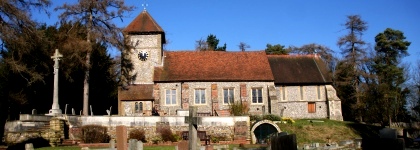

ST GILES ORGAN
A project to rebuild and modernise the organ at St.Giles was started in January 2019, with an expectation that it would be finished in time for Easter. This turned out to be very optimistic. A number of difficulties were encountered along the way, and the work was not completed fully until toward the end of the year. A period of settling in then started and this was still underway when Covid19 hit. Use of the organ had to be suspended, together with the opportunity to complete the fine tuning.
The project was managed by our Organist Clive Brearley, and he produced a number of progress reports while the work was underway. These were published on this website during 2019. Now that all is complete, Clive has gone on to prepare a comprehensive description and history of the organ, drawing on material written by past organists.
 |
 |
 |
The full document is available as a download here Download full History (pdf),
Here is the introduction to set the scene.
Introduction
Little about the St. Giles organs seems to have been documented in the past. On occasions when considerable expense has been involved little is recorded concerning how it all happened and there are a couple of occasions when lesser works were carried out but the only thing we have recording it is a brass plate on the wall.As a church organ is usually the most expensive single item in a church building this seemed a bit of a shame so I have tried to bring together everything that we know, adding in a few things that we don't know but can take a fairly good guess at and make it into some sort of a record. There would have been far wider gaps and (even more) inaccuracies had it not been for the help of John Wade, who was assistant organist at St. Giles in the 1960s. Most of the history of the organ up to 1963 is his work and the guesses are mine.
Organs at St. Giles and Fox's Brewery
The history of the Oak Brewery in Green Street Green is well documented
elsewhere and had a considerable impact on the locality, including the
start of the massive population increase that took place over the next
century or so. Green Street Green was within the Parish of Farnborough
until 1937. The St. Giles building was, of course, never intended to have a pipe organ. Prior to 1842 There was a musicians' gallery at the West end and music was probably provided by a band of singers and one or more instrumentalists. On January 16th 1842 a barrel organ belonging to Mr. Fox of Fox's Brewery was loaned to the church, 'and will remain in the church only during his pleasure unless any future arrangement be made between him and the officers of the Parish.' This was probably John Fox, who had founded the Oak Brewery in 1836 or possibly his son, Thomas Samuel Fox, as both were involved in philanthropic activity.
In 1844 the upper musicians' gallery was removed and the barrel organ placed in the lower gallery. There are records of monies being paid to have it moved from the back of the church to the front, and then back again, which implies that either it was not really adequate or took up too much room, as lack of space has been an issue over many years. The siting of the barrel organ in the lower gallery had led to the loss of seating and changes had to be made to seating on the South side of the church to make up for it.
The change to a proper pipe organ happened during the 1880s, which was quite late compared to some parishes in or close to London. Thomas Hamilton Fox, son of Thomas Samuel, was an organist (by 1961 some of his organ music which had been given to the church was still lying around in what was then the organ chamber) and in 1885 he offered to pay for a pipe organ to be installed in St. Giles on condition that the church provided a chamber to house it. Thomas's father died in 1883, leaving the brewery to his sons so when Thomas Hamilton made the offer of a pipe organ one would have thought that he might have felt the burden of the massive debt that his father had run up during the re-building of the brewery.
Some argument ensued over the addition to the building to house the new organ and a drawing of the proposed structure in the archives has scrawled over it 'this must never be built'. Alterations and restorations to ancient buildings usually open up cans of worms and the chancel itself was found to be in such a bad state that it had to be rebuilt in addition to the work on building the new organ chamber on the North side of the chancel.
Doubtless some at St. Giles at the time wished that the offer of an organ had never been made. . The organ was extensively modified in 1963 when it was moved to its present position in the upper gallery above the balcony, the console remaining in the nave.
Improving the Louder Bits (2022)!
Every organ is different. Each one has to suit different buildings,
acoustics and musical requirements. No organ could be described as
perfect. In the 2019 re-build of the St. Giles Organ, we managed to
achieve the things we needed to do to make it as good as it could be for
our present needs – except for one thing. One rank of pipes, a Trumpet
stop, which was not of the best quality and made a horrid sound
(certainly sounding nothing like a trumpet) was re-voiced by a
specialist to attempt to make a different, 'smoother' sound – known as a
Cornopean stop. The result was disappointing and not much better than
before. We had, to put it in laymen's terms, asked for silk purses to be
made out of sows' ears that were not even big enough to make that size
of purse. It was not really useable. One Saturday night last January an organist friend of mine rang to say that he was helping to dismantle an organ in a redundant United Reformed church in Epsom and it contained a rank of pipes that might make a good replacement. so off I went to get them and put them into storage, handing over a contribution equivalent to the scrap value. I cannot say that I have ever seen better made organ pipes. Made of quite heavy gauge ‘spotted metal' (an alloy sometimes known as organ builders' metal, a mixture of lead and at least 45% tin), they looked as if they might indeed be the answer. I reckon that they would have cost more than £12K to have made today. Off to St. Giles I went with a few of the pipes to meet up with Phil the tuner who tried putting them into the organ to try them out. They sounded good so I asked for a price for cleaning them, regulating and installing, expecting it to cost around £350.
The quotation arrived - £2500 + VAT! More alteration needed to be made to soundboards, rack boards etc. than I had hoped. I was delighted when the PCC agreed to the expenditure. It was felt that having spent so much money on the organ re-building it would be the right thing to do in order to complete the project. So, I delivered the pipes to the organ builder's brand-new works outside Canterbury, which I must say is rather more impressive than the old works which was in an old village school that was falling down, with instructions that the pipes needed to be set up properly on their voicing machine to confirm that all was in order before doing alterations to the organ itself.
In early August work commenced in church. Not everything had been done in the works in the way I had specified and a couple of shirty emails later (through the years I have become an absolute expert in writing shirty emails to organ builders) another day was spent by them in church putting right what should have been done properly before they started. I have included a photo of what one of the new pipes looks like. They are a bit odd looking; you might feel! Organ pipes are divided into two groups: flue pipes (the sort you see on the front of the St. Giles organ which function in the same way as a whistle) and reed pipes like this one, which produce their sound in the same way as an orchestral reed instrument such as a clarinet. Because of the slightly unusual way in which the new pipes are made we knew not only who made them and when but that they would make the sort of sound we were looking for. The pipes that they replaced were not particularly well made and included a few oddments.
Organs really hate the sort of weather we have had this summer and it tends to make them go out of tune. So, after a month or so settling in, the 'new' pipework had its final regulation and tuning towards the end of September. I'm personally over the moon that what was really bugging me is now resolved and really works well but what is far more important is the Parish's commitment to the future of music at St. Giles. A contribution of £1250 (half the cost) has generously been donated by the Friends of St. Giles and we are very grateful to The Friends Committee and its members for this grant.
Clive Brearley